
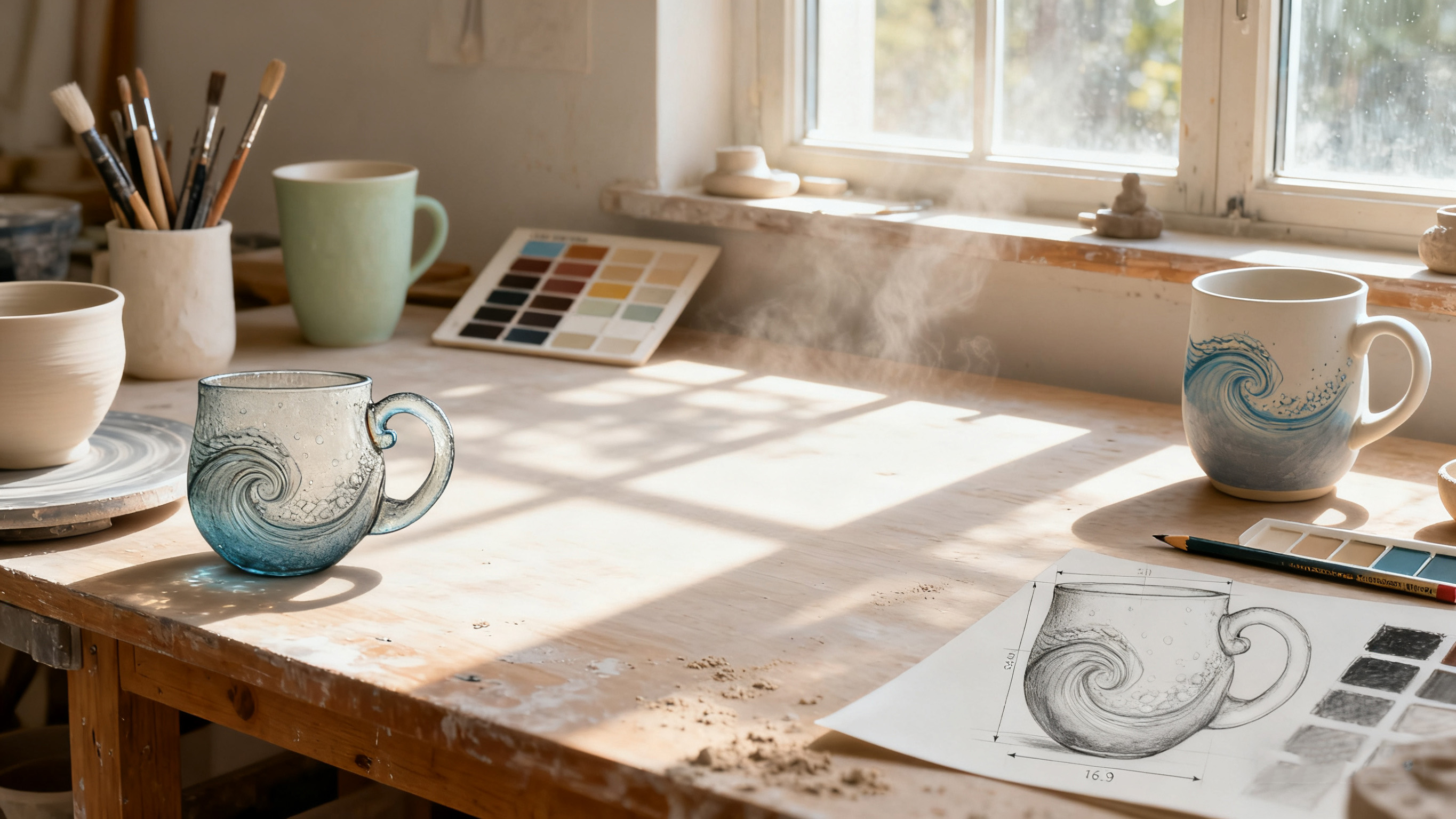
Every day, we hold a mug — for morning coffee, afternoon tea, or a quiet break between tasks.
But have you ever wondered where it comes from, or what makes a truly good mug different from the rest?
A mug is more than just something that holds your drink.
It reflects your health, your habits, and your values — and behind every good mug lies a story of design, craftsmanship, and care.
🎨 1. Design — Where Beauty Meets Daily Life
Good design doesn’t start with a machine.
It starts with a feeling — a moment of inspiration drawn from nature and daily rituals.
Many designs are inspired by the calm rhythm of the ocean, the texture of sand, or the soft light of morning.
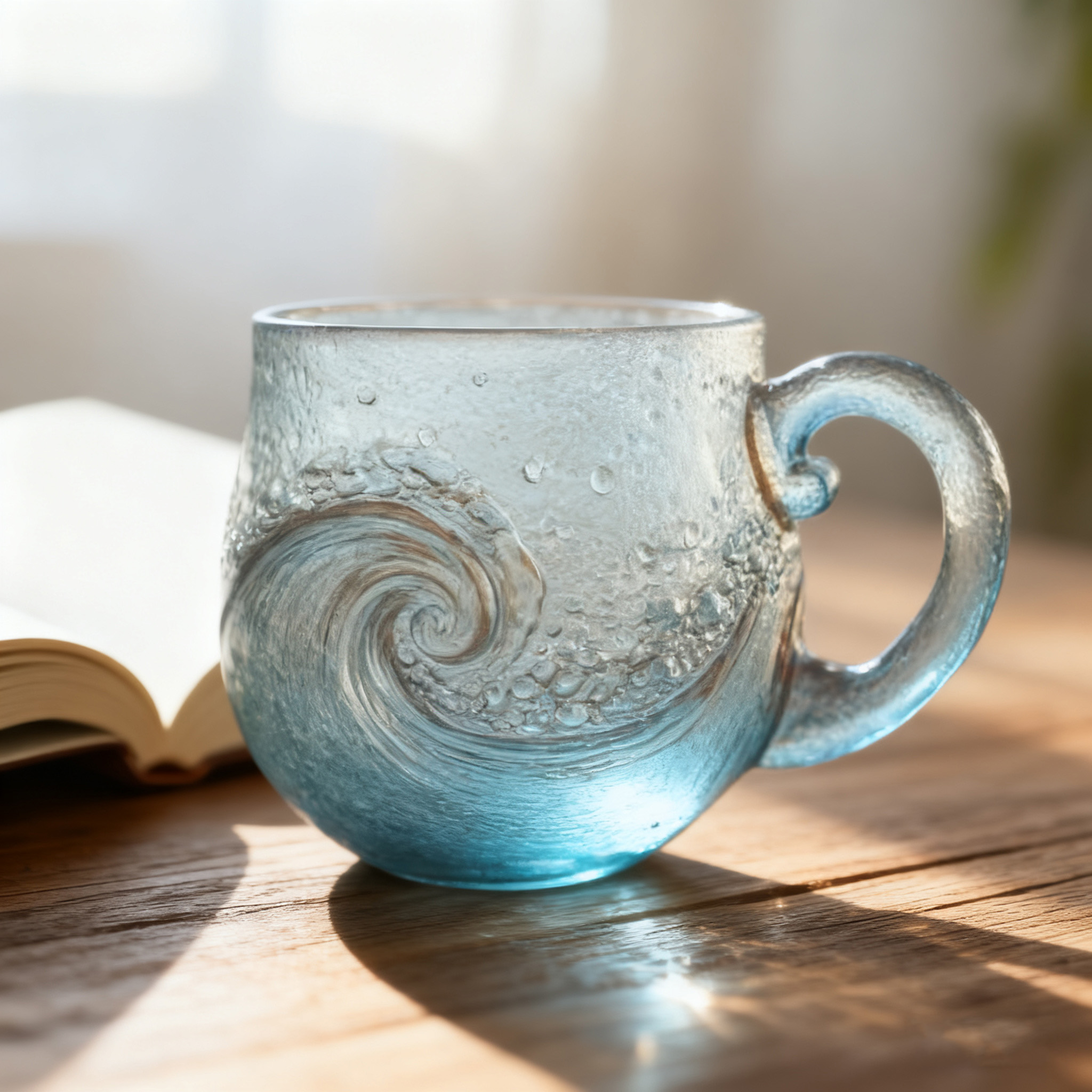
Take our Sea Glass Wave Mug, for example: its flowing curves and translucent green hue were inspired by sea glass — those smooth, ocean-polished fragments that carry both time and tranquility.
Here, design becomes more than decoration; it’s a way to connect function and emotion.
A mug should feel right in your hand — balanced, comfortable, quietly beautiful.

🔬 2. Material — The First Step Toward Safety and Sustainability
The heart of every good mug lies in its material.
Different materials not only shape the look and feel of a mug, but also its impact on health and the environment.
| Material | Pros | Potential Concerns |
|---|---|---|
| Ceramic | Good insulation, elegant texture | Glaze may contain lead or cadmium if poorly made |
| Plastic | Lightweight, unbreakable | May release BPA or chemicals under heat |
| Stainless steel | Durable, long-lasting | Can alter the taste of beverages if not food-grade |
| Glass | Non-toxic, recyclable, pure | Fragile, requires precise craftsmanship |
According to the U.S. FDA, low-quality glazes in some ceramics can release small amounts of lead or cadmium when exposed to heat.
That’s why choosing lead-free, non-toxic, heat-resistant materials matters.
High-quality glass or borosilicate offers the ideal balance of safety and sustainability —
it’s odor-free, recyclable, resistant to temperature changes, and kind to both your health and the planet.
🏺 3. Craftsmanship — From Sand to Soul
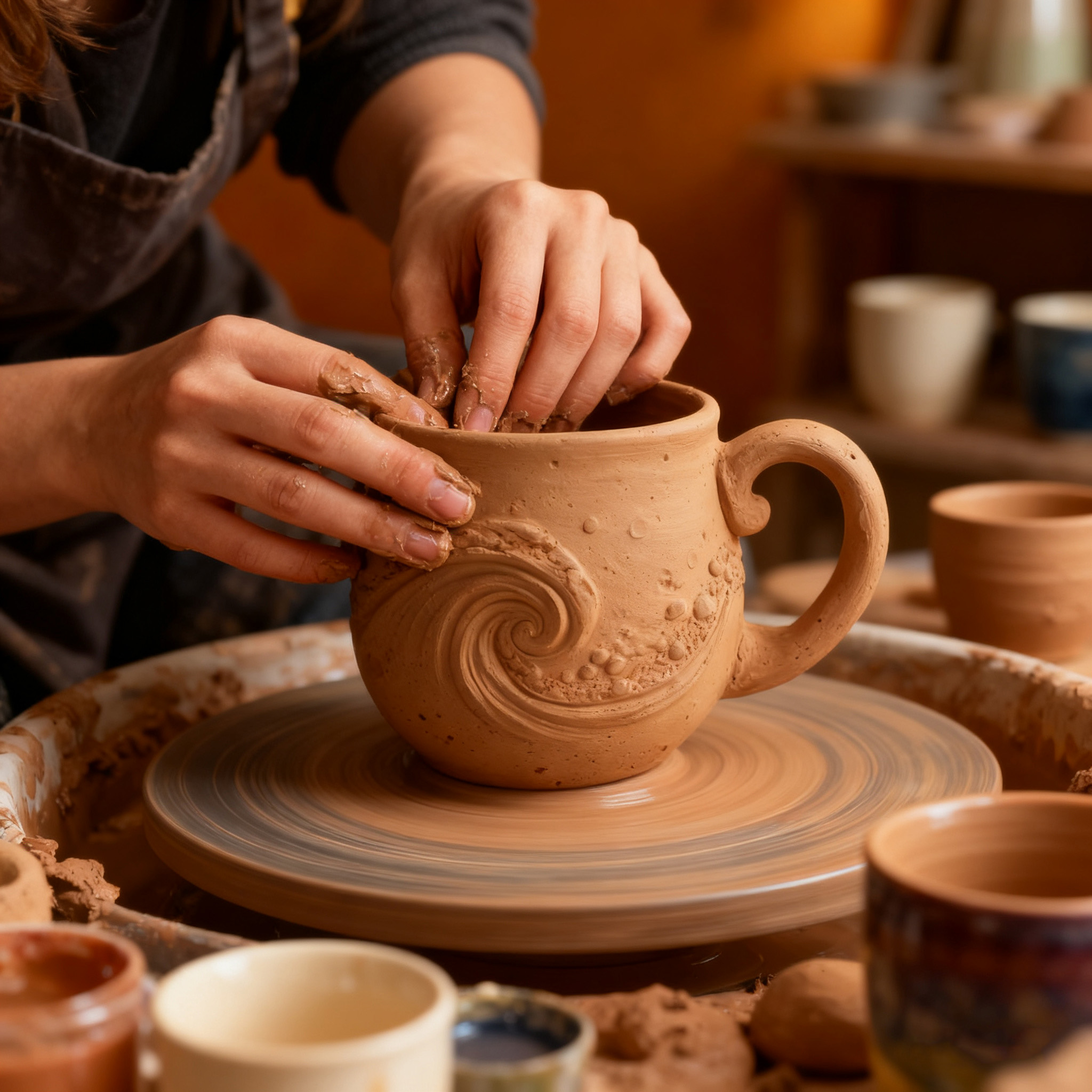
Making a glass mug is a process of transformation — from raw material to refined art.
1️⃣ Melting: Recycled glass or quartz sand is heated above 1,400°C until it turns into glowing liquid.
2️⃣ Shaping: Skilled artisans blow or mold it into shape, crafting every curve with care.
3️⃣ Annealing: The mug is cooled slowly to prevent internal stress or cracking.
4️⃣ Polishing: Each rim is hand-polished to ensure a smooth, gentle touch on the lips.
5️⃣ Quality Check: Transparency, balance, and finish are inspected one by one.
Each well-made mug goes through over 10 quality control steps before it’s ready to use.
This process may be technical, but it’s also deeply human — a blend of patience, precision, and pride.
🌱 4. Sustainability — The Mug’s Second Life
A truly eco-friendly mug doesn’t stop at safe materials.
Its entire journey — from design to packaging — should reflect mindfulness.
-
♻️ Recycled glass reduces energy consumption by up to 30%
-
🌿 Plastic-free, biodegradable packaging minimizes waste
-
💧 Durable construction encourages long-term use and fewer disposables
Every step is a small act of respect — for the earth, and for the quiet rituals that connect us to it.
“Sustainability isn’t just a trend — it’s how beauty and responsibility coexist.”
🌤 5. Conclusion — The Everyday Poetry of a Cup
Every mug has a journey.
From a designer’s sketch to the craftsman’s fire, and finally to your hands —
it carries stories of intention and care.
A good mug won’t change the world.
But it might change the way you experience an ordinary morning.
To hold it is to hold a little warmth, a little calm — and a small reminder that meaning lives in the simplest things.
🌿 In the End
The next time you sip your morning coffee, take a second to notice your mug—the curve of its handle, the weight in your hand, the way it holds warmth.
Behind it lies an entire world of design, craftsmanship, and care.